
Summary & Technical Highlights
Why Glasgow's soft Loch Katrine water causes rapid black iron oxide sludge in heating systems. ADEY magnetic filter protection and powerflushing.
✓ Fully verified against current Scottish Building Standards & Certified Heating Regulations.Overview & Key Takeaways
Since 1859, Glasgow has drawn its drinking water from **Loch Katrine** in the Trossachs via a Victorian aqueduct engineering marvel. Loch Katrine water is renowned as some of the purest, softest drinking water in Europe, containing virtually zero dissolved calcium or magnesium.
However, in central heating systems, this purity presents a serious challenge. Without dissolved alkaline minerals to buffer water pH, untreated Glasgow water is naturally slightly acidic. In an uninhibited central heating circuit, this soft water acts as an aggressive electrolyte, sparking a continuous electrochemical reaction known as **galvanic corrosion**.
The Electrochemical Reaction: How Sludge is Formed
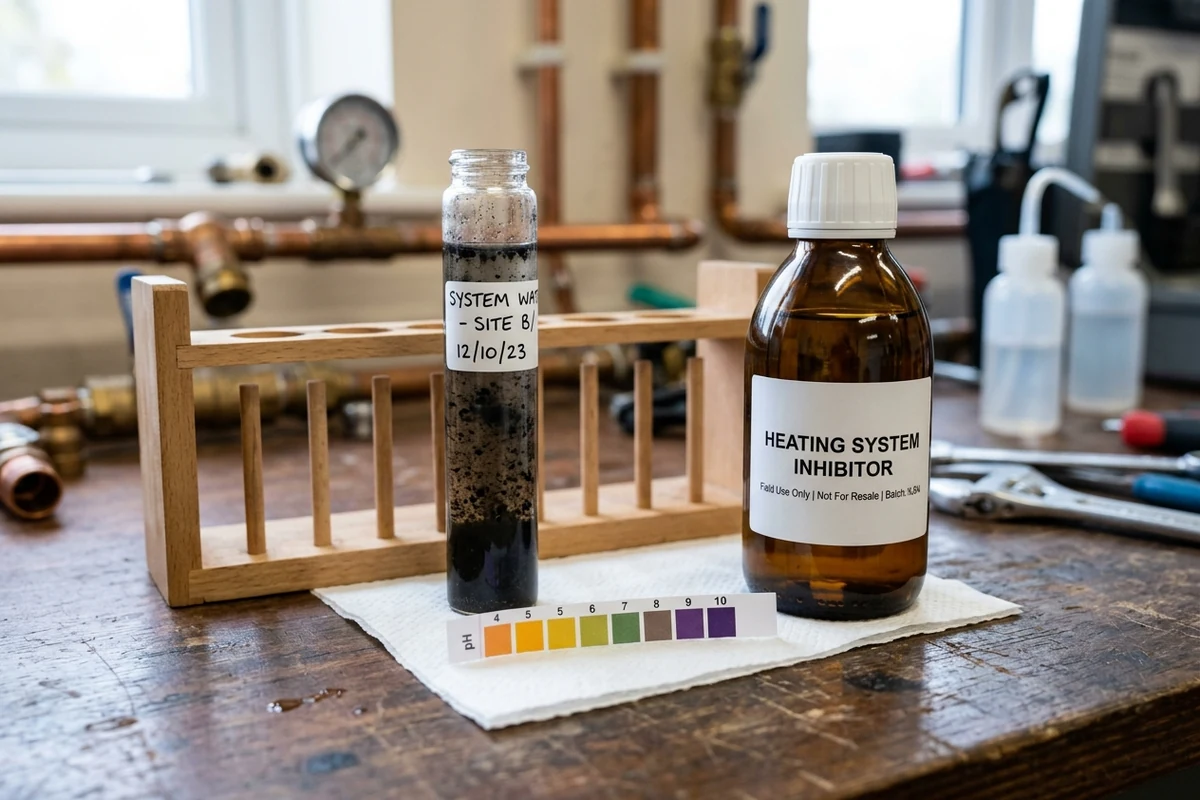
When steel radiators, copper distribution pipework, brass valves, and an aluminium or stainless boiler heat exchanger are connected in an untreated water circuit: 1. Mild steel radiators act as the sacrificial anode, shedding electrons to the noble copper pipework. 2. Dissolved oxygen in fresh water reacts with the iron to form black iron oxide sludge:
$$3Fe + 4H_2O \longrightarrow Fe_3O_4 + 4H_2$$
This dense, black, metallic compound is known as magnetite. It is three times heavier than water and forms a thick, tar-like sediment that settles into the lower channels of your radiators and circulates through the boiler.
The Consequence: Ruined Plate Heat Exchangers
Old cast-iron sectional boilers had wide internal water passages that tolerated sludge. Modern A-rated condensing combi boilers feature compact stainless steel plate heat exchangers with water passages less than 1.5mm wide.
When magnetite sludge circulates into a modern combi: - It instantly coats the heat transfer plates, causing hot water to run warm or cycle hot and cold. - It bakes onto the primary burner, causing localized boiling, loud kettling noises, and eventual thermal cracking. - It lodges in the magnetic rotor of modern high-efficiency variable-speed circulation pumps, causing premature pump motor failure.
The Solution: Mandatory BS 7593:2019 Compliance
To ensure that a new boiler achieves its intended 12 to 15-year lifespan in Glasgow, every installation arranged through The Online Boiler Company includes a comprehensive chemical cleanse, installation of a permanent ADEY MagnaClean magnetic system filter, and treatment with high-concentration corrosion inhibitors.
---
For sandstone tenements and high-ceiling flats across Glasgow, book a specialist tenement boiler installation, upgrade with a direct drop-in tenement boiler replacement from £1,299, or schedule an engineer for a fixed £90 Glasgow boiler repair.
Need a Fixed Price for a New Combi Boiler in Glasgow?
Get an exact upfront trade wholesale quote online in 60 seconds. Guaranteed fixed pricing from £1,299 with zero sales pressure and complete price transparency.
Get Your Instant Fixed Quote →